Edie Brickell – Good Times

I first saw the Edie Brickell – Good Times video when it was included on the Windows 95 install CD as a way of showcasing the video capabilities of the new operating system.

At the time video on a computer was something that just didn’t happen and if it did was usually as a small window showing the video, the phrase postage stamp sized video was often close to the truth. I remember been impressed with the two video files included with Windows and that I could play them on my PC. I think it was these videos that, as they demonstrated that video could be on a computer, inspired me to buy the Matrox Rainbow Runner video card so my PC could record and playback full screen video. I used that a lot for capturing video so I could play it back during Powerpoint presentations back in the latter half of the 1990s. It always bothered me that my television and video recorder could do all this video stuff, but my (much more) expensive computer was just not capable of playing video let alone capturing video. At least the Rainbow Runner allowed me to do what I wanted with standard definition video, even if a standard Windows PC couldn’t at that time.

Today my iMac is capable of playing multiple 8K videos at the same time as well as capturing and recording similar quality video. I can even stream 8K quality video from the internet. How times have changed, for the better I think. I am always impressed with how we can manipulate, edit and encode video these days.

As for the feel good song, even after all this time I still like to play it now and again, I think like any good song it stands the test of time in terms of its listenability.

Coffee and charging…

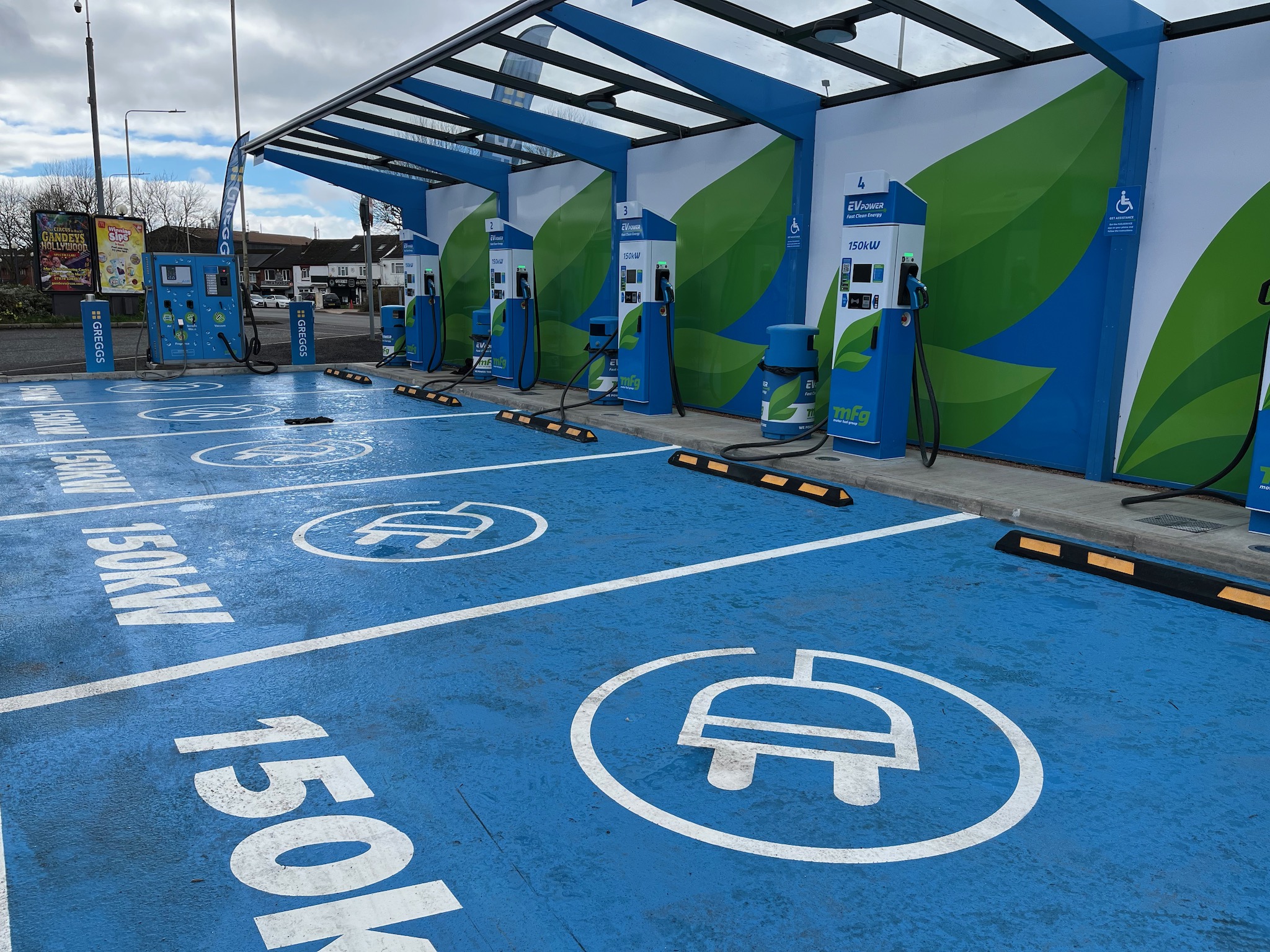
After seeing that the chargers at the Shell Garage had gone live, and needing a charge, I decided to take advantage and try them out.

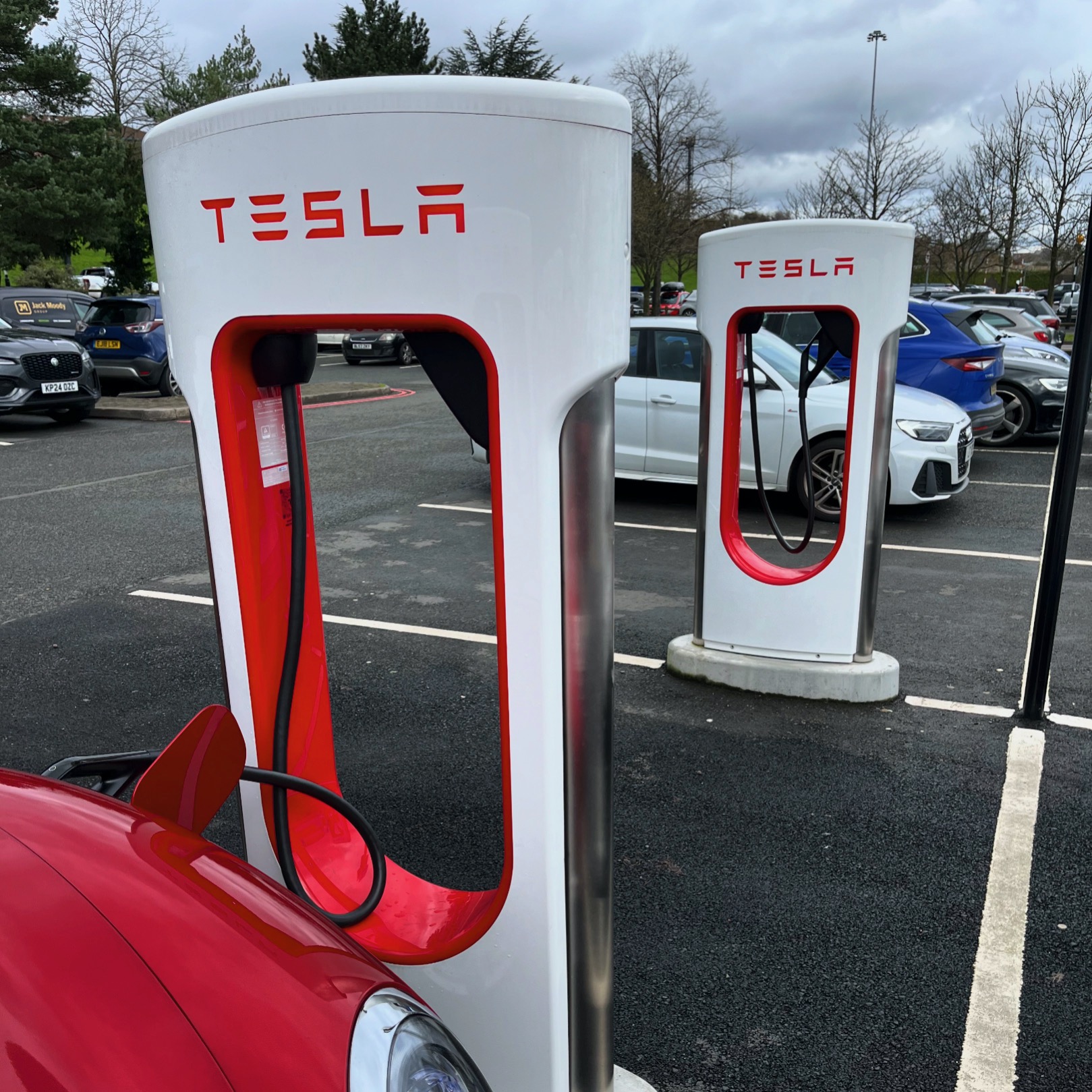
They have a series of six 150KW chargers, each with CSS and CHAdeMO chargers. I connected the Funky to the charger. I plugged the cable in, which as with a lot of CSS chargers was quite heavy. It was then a simple matter of tapping with contactless and setting the charge going.

It was nice not to worry about if the chargers are in use, with six I was pretty sure one would be free. This is unlike the Osprey chargers at the nearby Travelodge which I have found to be used quite heavily, and I have on the odd occasion when using them, find them in use, forcing me to come back later. At least with these MFG chargers, there being six, means more chance one will be free.

Whilst I was charging I went for a coffee at the Starbucks next door.

Within fifteen minutes I had already gone from a 18% charge to 42%.

I wasn’t going to do a full 100% charge, the aim was to get between 60% and 80%.

Finally…

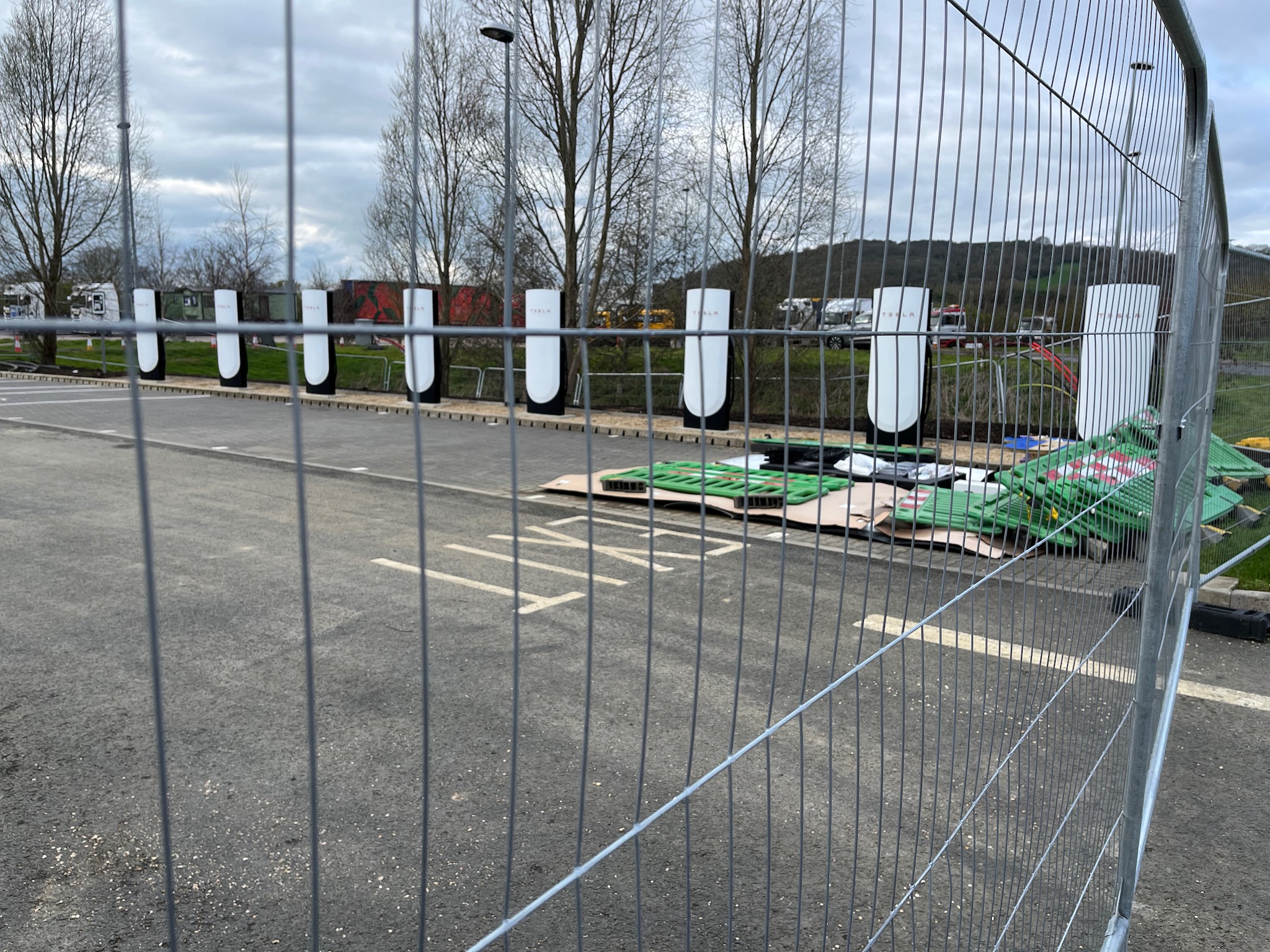
When I was considering an electric vehicle I was concerned about where I could charge the car. Close to where I live is a Shell Garage and they had a series of six 150KW chargers. This I thought would be ideal for rapid charging the car when needed.

You can imagine when I got my car back in August and checked the garage out I was somewhat disappointed that the chargers had not been connected to the grid and weren’t operational.

When I checked with the staff, they said it had been planned for the end of July… they didn’t have a date for when it would be done.

This was annoying and frustrating. There are a couple of Osprey chargers at a nearby hotel and I have used them. One time though it was challenging as others were  using them, luckily I was not in a hurry.

So it was a nice surprise when I was at the garage today, to wash Funky, when I saw that the MFG chargers were operational now and that other electric vehicle owners were charging their cars.

The MFG app, which I have downloaded, also confirms that they are connected and working.

They’ve not been added to the Zap-Map yet, nor on Google Maps.

Charging this week

I was in the office three times this week, and I was able to park and charge my car three times to 100%.

What I did find interesting was the different predicted ranges I got after each charge.

After the first charge the predicted range was a healthy 185 miles

The second time I charged the range had dropped to 162 miles.

Third charge resulted in a range of 177 miles.

I am not entirely sure why the variety. The journeys before charging were very similar, some urban, some motorway, some normal roads.

I find it interesting, as in itself, it creates future challenges when planning journeys with charging breaks. Would 160 miles from a full charge be pushing it too far for example?

I will continue to monitor the ranges as I charge.

So how do you make a cup of tea?

woman drinking tea
Image by Foundry Co from Pixabay

Understanding the problem is part about knowing what the problem is, but often much more about understanding how the problem arose, the context, and the background.

There’s no such thing as an easy fix. Things which can be fixed easily aren’t generally seen as problems that need fixing, they are seen as tasks that need completing.

I will try and illustrate that with the simple problem of having a cup of tea.

I want a cup of tea, but there’s no water in the kettle. A simple problem resolved by filling the kettle with water and putting it onto boil, making the tea, and there you go.

This was an easy fix. 

Now imagine you want a cup of tea, but there isn’t any clean water supply. First you need to provide fresh water. Without a water supply you could install a supply, but a temporary solution might be to go out and buy some bottled water. Cheaper in the short run, it will be more expensive in the longer term. 

Then there is the challenge of boiling the water for the tea. What do you do if there is no kettle. Go and buy a kettle. 

An electric kettle is great if there is an electricity supply, but what kettle do you get if the fuel source you have is gas or an open fire. 

Finally you need to choose a cup. You would not be surprised how often this takes time as some people have a favourite cup others take their time to choose a cup. Reality is that this is probably the least important part of the process. 

If you have a water supply, electricity, a kettle, and a supply of cups; it can be frustrating to see and difficult to understand why others can’t easily make a cup of tea. 

You could argue that there is an easier fix of going somewhere and buying me a cup of tea. That is a quick fix, but is it sustainable in the long run?

This analogy shows the importance of dependencies and the context when you try and solve a problem. You also need to understand the skills and knowledge of those facing the problem.

Those with the foundations, the resources, the skills and capabilities, will be easily able to deliver a solution to what they see as a simple problem. However they may have not realised their journey in getting to that point when they are able to easily make tea. Just telling people to make tea, or showing them how to make tea, often isn’t sufficient, if they lack the foundations and infrastructure to actually make a cup of tea.

Now let’s not even mention coffee…

Smart Cruise Control

I have been using the Adaptive Cruise Control (ACC) on the Funky Cat quite a bit. Unlike traditional cruise control, as well as maintaining a constant speed without using the accelerator, it will also change the speed to ensure that the Funky Cat maintains a safe distance to the car in front.

I didn’t realise that there was a Smart Cruise Control functionality with the Funky Cat. It was only after reading a post on the Facebook that I realised that I could use this option. Under Smart Cruise Control the Funky will maintain the car in the centre of the lane it is in, as well as maintaining a consistent speed and a safe distance.

So driving back home on the M5, I decided I would try it out.

Essentially it did work. As I drove down the M5 I was pleased how it functioned. I certainly kept within the speed limit, at a safe distance from the car in front, and it kept me within the lane. Changing lanes worked fine, it would turn off and then turn itself back on.

I wasn’t entirely comfortable with the autonomous driving capability, but did appreciate how it helped to keep my car in lane.

I couldn’t charge, but I got two strikes

bowling alley
Image by Sharon Ang from Pixabay

We had headed up to the Venue at Cribbs Causeway for a game of bowling. The car park was really busy, but I had anticipated that and had planned to park in an electric vehicle charging space.

Having arrived there were spaces there. The chargers were provided by Revive.

Having connected the car I tapped my contactless bank card, but they didn’t accept contactless payment. I then tried my Shell RFID card, but that wasn’t accepted either.

I was running out of time, I didn’t want to miss our bowling slot. So I moved the car to a non-charging space.

Later I checked online and found that the Revive Charging Stations at the Venue only take Geniepoint web app or the Revive RFID card. I didn’t have time to sort that out when I was parked, but is something I will remember if I decide to use them in the future.

Oh I did get two strikes when bowling.

8% charge

I hadn’t planned to go right down to a 8% charge, but circumstances resulted in the Funky getting down to an 8% charge before I could get to a charger.

Not entirely accurate as I did get to a charger, but that didn’t work out.

So what’s the story?

The car had a 19% charge this morning with a predicted 34 mile range.

Decided to try out the free charging capability at Asda in Clevedon.

Both bays were free.

Needed the BP Pulse App to connect and charge, so that took some time.

First attempt failed.

Second attempt did work.

Really, really slow. After 15 minutes the car had charged an additional 2%. So much so that decided to abandon the process.

Did think about heading to Gordano Services and using their Gridserve chargers, but with just 14 miles to the office and a predicted range of 26 mile, I thought I would just go straight to the office.

I arrived with just 8% charge left and a predicted range of zero! Put the car on charge.

Some time later I was at 100% and a predicted range of 175 miles.

Mer

At The Campus in Weston Village they have a couple of EV charging spaces. One is reserved for local authority vehicles, but the other is available to any EV users.

It is a Mer charger, and as with most (if not all) fast chargers, you will need to bring your own cable.

I used my Shell RFID card. It is a fast AC charger. It was a simple matter of connecting the car, tapping the card reader and letting it charge. I was connected for two hours and it added about 50% to the charge.

Nice and easy.