Charging once more at Stourhead

Stourhead

Back in February I visited Stourhead and did a behind closed doors tour, however the house’s state rooms weren’t open, since I had always planned a repeat visit to see these rooms.

On that visit I did make use of the EV charging facilities. Though I had a few issues with the ChargePoint app and my bank card, in the end I used ApplePay and all was fine.

So, on a recent return visit to the property I was able to easily plug the Funky Cat into the chargers, and again I used ApplePay to set the charge going.

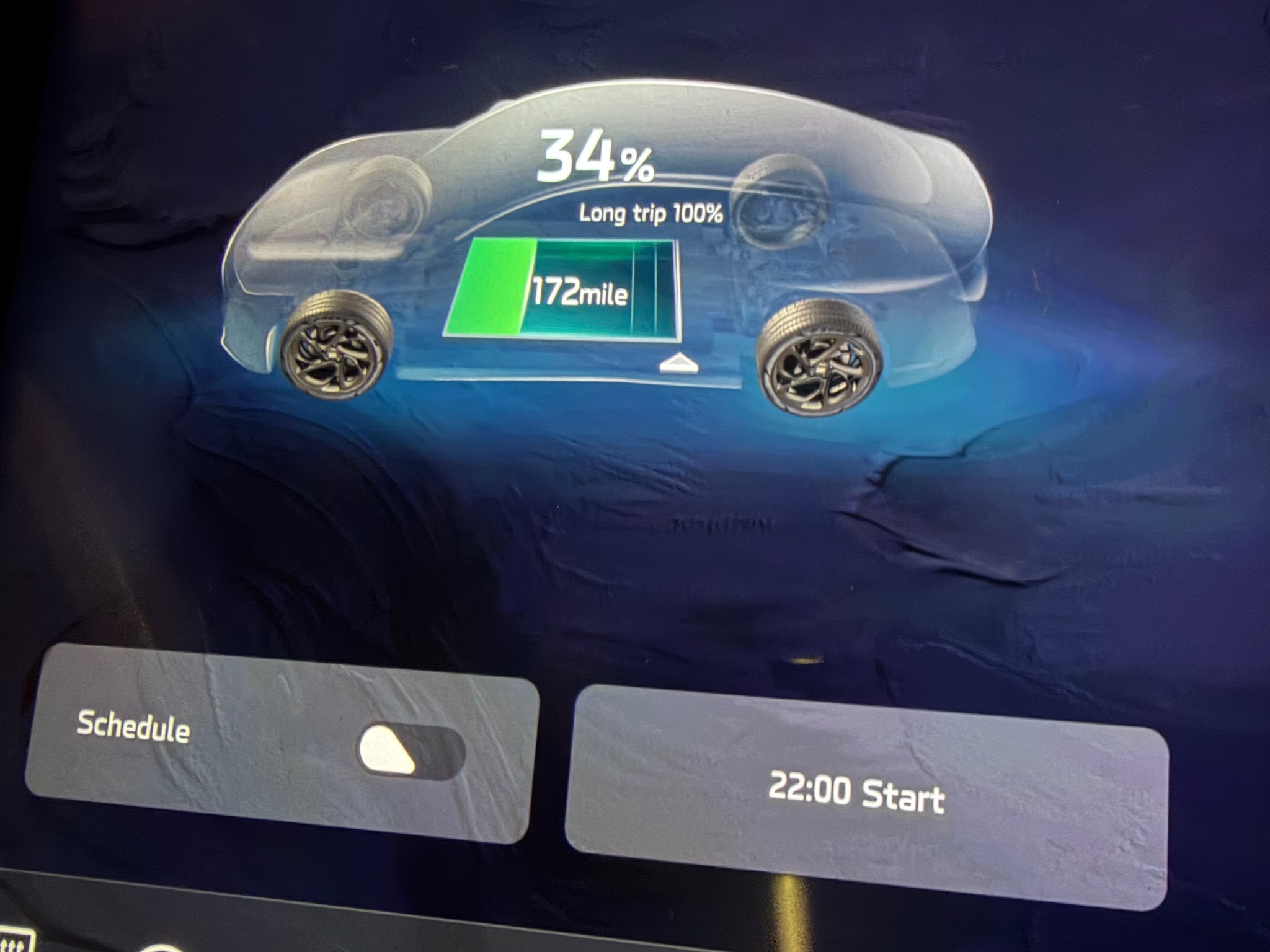
Stourhead also had some rapid chargers which looked like they could deliver more charge (so faster charging). The last time I was there they weren’t available as there had been a cable theft. This time they were working. After my visit I disconnected from the fast (11kWh) chargers and decided I would top off my charge using the rapid chargers. I was at about a 70% charge, so wasn’t expecting miracles, but the actual charge rate was very slow, so I didn’t connect for long.

There was an issue which may be just me, but on the fast charger   ChargePoint put a £15 hold on my card, I spent just under £10, but the remaining hold was still there five days later! The rapid charger took a whopping £35 hold and likewise it was still being held five days later.

I don’t think I had this issue at other National Trust properties recently as I have spent more than the £15 held. This time though there was a £50 hold on my bank card and I only spent £13.

Didn’t put me off, and I do appreciate the fact that chargers are available at some National Trust properties.

Apple at 50 and the iPad

iPad with Apple Pencil
Image by Sakura Phutthalong from Pixabay

Apple started back in 1976, though I am old enough to remember 1976, my personal history with Apple begins half way through their fifty year history in 2001.

I have already written about my computing for personal and professional reasons, and the iPod, this post is about the iPad.

Apple announced the iPad in January 2010. To be honest I was impressed about this new product.

I had always liked the Tablet format, however the big issue with Windows based Tablets was always the standard Windows interface, fine with a mouse, didn’t really work with the Tablet interface; and you certainly couldn’t use your finger very easily. The iPad touch interface was like the iPhone interface which made it much more usable device than say a Windows XP Tablet.

There was a delay before they were available in the UK and I got one on the launch day.

It certainly met my expectations and over the last 15 years I have used the iPad extensively for home and work.

Over the year I have had about six or seven iPads, however they have either been standard iPads or the iPad Pro. I have never used an iPad mini or the new(ish) iPad Air. My current iPad is a 12.9” iPad Pro (3rd generation) and is about eight years old. I have been thinking about replacing it, but I don’t have as many use cases for it compared to how I have used it over the years. Part of how I would use it, I now use my phone for, and other aspects I now use a laptop. Where it always won out though was for sketch notes. One of the reasons I would replace the iPad is for sketching, as the battery in my current iPad doesn’t long as last as it use to. Another thing I never had was an iPad with cellular connectivity, and I think if I was to replace the iPad I would ensure that the new one came with cellular connectivity.

Lidl EV Charging

After some problems with the Tesla chargers and not getting a charge, I headed off to Lidl close to Cribbs but towards the A38, to get some shopping done. When I got there, I saw they had an EV charger. Using the Lidl app, I could get charged for 62p a kWh. A little more than the Tesla chargers but still a reasonable price. 

The only time I have used Lidl EV charging before was in France where it worked really well and was significantly cheaper at €0.39 per kWh (that’s about 34p). Though I set up the Lidl app in France, that was the French Lidl, so I had to repeat the process for setting up the app and being able to charge the car. Once this was sorted, I put the Funky Cat on charge and went and did some shopping. I took my time. I only had the car on charge for thirty minutes, but that had put on nearly an additional 50% charge, taking me to 71%. I was impressed with the speed of charging and it wasn’t 85p that the MFG garage would charge me, they’re situated on the way between Cribbs and Lidl.

Problems with the Tesla Chargers

red car next to Tesla charger in a car park

The last time I went to Cribbs Causeway I had problems with starting a charger using the Tesla chargers next to John Lewis. I have used these chargers before and have had issues as well.

The process I use is to park, using the Tesla app and start the charge, I then plug the charger into the Funky Cat. What should then happen, is the charger should initialise and then start charging. What actually happens is the charging fails to initialise, however when you “stop” the charge in the app, the charging gun remains locked to the car (this is a car issue thinking the gun is still live). I then have to use the manual release of the cable from under the bonnet, which should be an easy task, but isn’t.

The last time I tried to charge I made three attempts across two different chargers. None worked, in the end I went to Lidl and used their charger.

Apple at 50 and the iPod

Apple started back in 1976, though I am old enough to remember 1976, my personal history with Apple begins half way through their fifty year history in 2001.

I have already written about my computing for personal and professional reasons, this post is about the iPod.

Apple launched the iPod back in 2001. The first iPod was, when you think about it, not really going to be a success. It was expensive, it was Mac only, it needed Firewire and there was no where to buy music, you needed to use iTunes to rip your CDS to mp3 and then transfer them across. No wonder at the time lots of people were sceptical and thought the iPod was doomed to fail.

I didn’t get one, partly as it was very expensive, I didn’t really use Macs at that point and I had a CD player!

I didn’t get an iPod until the fourth generation in 2004 (that’s me a late adopter) this was the version that could show photographs. It wasn’t until iTunes added podcasting support in 2005 that my iPod became essential. I used it extensively for podcasts as well as music.

I did use various iPods as part of the MoLeNET projects back in the 2000s including the iPod nano and the iPod touch. I also used a 6th iPod Classic, on this I could add images and video, as well as music.

Since getting an iPhone though and the advent of various streaming services I no longer use an iPod. Sometimes I think I would like to have one back.

Not Charging at Hardwick

Hardwick Hall

More and more National Trust properties are putting in EV charging stations. These are mainly fast chargers, which means they are the slower 11kWh chargers, which are in fact ideal when visiting a property.

I had actually chosen to visit Hardwick Hall as I was on my way back from visiting Yorkshire and they had (according to the website map) EV charging facilities. For me this meant that I could stop there, charge the car, enjoy visiting the house, walk the grounds and still have time for a scone and a pot of tea.

However… the EV chargers were not by the house, so I couldn’t charge the car. According to the volunteer I spoke to, the EV chargers were down by the ponds, a thirty minute walk to the house. I didn’t really have time to drive there, and walk back. So, I left charging to another time and went to explore the house.

Charging at Fountains Abbey

Fountains Abbey

More and more National Trust properties are putting in EV charging stations. These are mainly fast chargers, which means they are the slower 11kWh chargers, which are in fact ideal when visiting a property.

I recently visited Fountains Abbey in North Yorkshire. The directions for the EV chargers wasn’t very clear, but I eventually found them in car park A. I plugged the car in and set it charging by using Apple Pay on my iPhone. Unlike many other chargers which use contactless they only take a £15 hold on your card. 

I had quite a low charge on the car, and in the end I added 35kW to the car. That took just over three hours which was more than enough time to explore the ruins of the abbey and have a nice walk in the gardens. I even stopped for a scone and a pot of tea.

I did think (initially) that the 50p kWH was reasonable, but this doesn’t include 20% VAT, I had misread the screen. So the actual cost is 60p kWh, which is still okay, but I do think it could be cheaper.

I was lucky in that there were plenty of chargers free, however I went on a weekday in April. I can imagine at weekends, during school holidays, and in the summer, it must be much busier and I would be cautious about arriving and relying on the EV chargers being available. The very fact that they are 11kWh chargers does mean that this isn’t a super rapid charge, but the type of charger where you are going to leave your car for a fair number of hours, even the whole day. The problem with rapid chargers can be, was was apparent at Stourhead is that the attached cables are prone to being cut off and stolen, and most National Trust properties are in rural locations. Hopefully something could be sorted to avoid cable theft so that rapid chargers can be used.

Widgets on the CarPlay

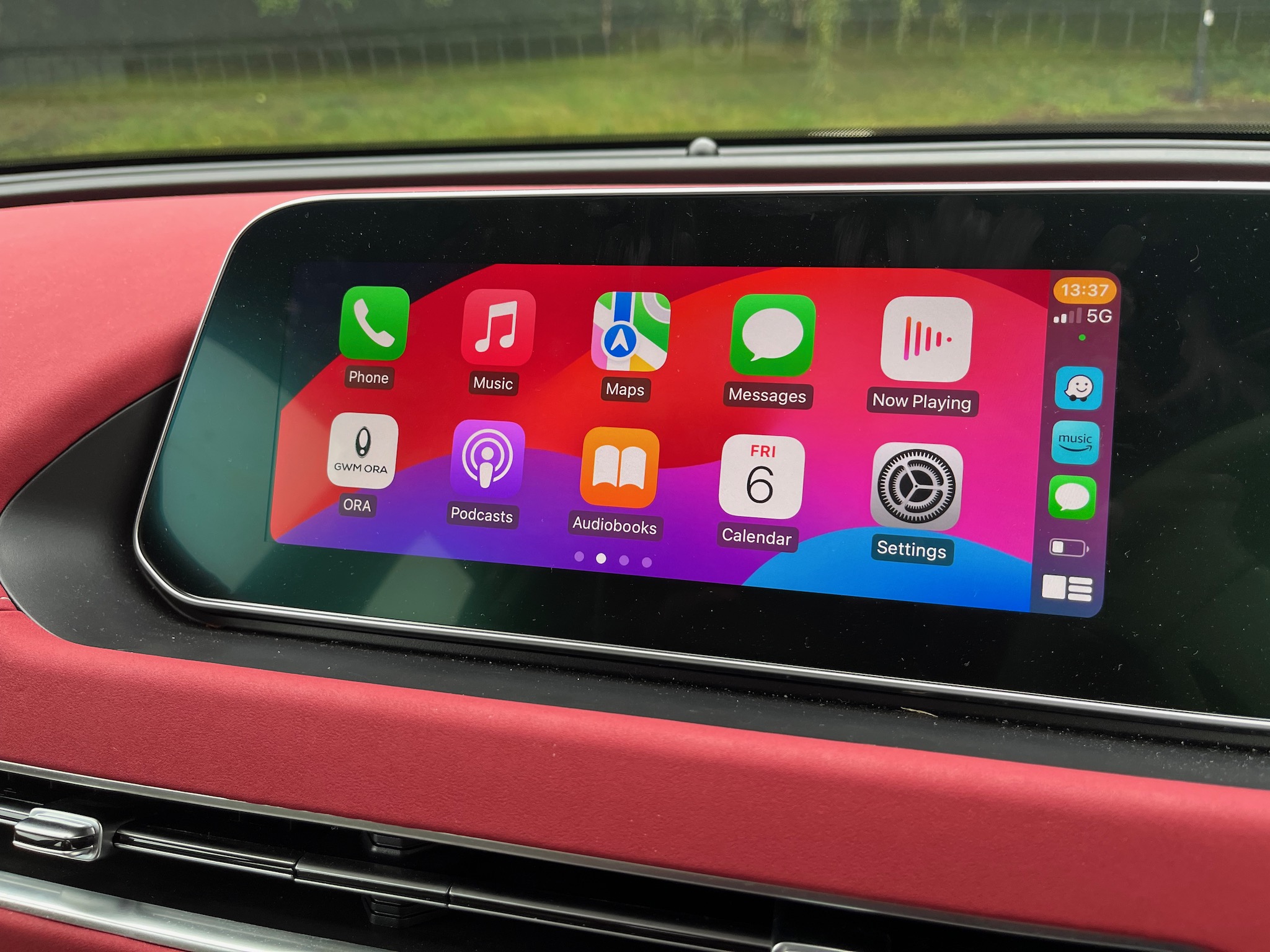
I just discovered I could have widgets with CarPlay. Checking online I discovered that this was a feature with the iOS 26 upgrade. Obviously when this was released I hadn’t checked the the release notes.

What I like is that I can have a clock widget and a weather widget. The Funky Cat does display that information, but it is in very small text on the car home screen. I often have to ask Ora what the temperature is, which of course, switches CarPlay back to the Ora infotainment screen.

Not all the widgets I have seem to work or have a function (even in park).

Apple at 50 and the Mac

Apple started back in 1976, though I am old enough to remember 1976, my personal history with Apple begins half way through their fifty year history in 2001.

In my computing for personal and professional reasons I was a Windows user. I was aware of Apple computers in the 1990s and was impressed with the new G3 iMac in 1998 and liked the different colours. However, I was ensconced in a Windows ecosystem so why would I use a Mac?

In 2001 that reason came to ahead when I was working for a consortium of colleges supporting them with online learning, and one of those colleges said we use Macs, specifically G4 PowerMac computers so we had to get a Mac. Looking over the Apple range, I saw that the “cheapest” G4 Mac was a G4 PowerBook. I recall saying to myself, well if I am going to need to support users of Macs, then I better familiarise myself with the Mac. I got the second generation 550MHz G4 Titanium PowerBook.

It was a couple of weeks, and I was a convert to the Mac. I remember getting the PowerBook an Airport card so that I could have Wi-Fi.

Over the next few years, I upgraded the PowerBook to a 1.5GHz G4 Aluminium PowerBook with integrated Airport Extreme.

In 2003 when the Power Mac G5 was released I got one of those to use, a Dual 2GHz model.

The next Mac I got was something of a disappointment. Apple moved over to Intel, and I got an Intel iMac. I think the issue was the lack of RAM more than anything, it came with 1GB of RAM.

It wasn’t that long before I upgraded my computer to a 27” iMac with more RAM. The screen was amazing.

At this time, I was working for an FE college and with the funding I was successful in bidding for I was able to almost get a new MacBook every year, well every time a new model was released. The replaced models were then redeployed in the college.

When I changed jobs, I did have an 11” MacBook Air for a while which was perfect for working whilst travelling. I also tried out the cylindrical Mac Pro for a while which was very fast (at the time).

My next home device was the 27” Retina iMac. This was a great computer except one feature which was the fusion drive. It failed twice on my iMac, resulting in a replacement at the Apple Store.

I did use this computer for many years, but eventually it was used less and eventually was no longer supported by Apple.

Today (after a few laptops) my main Apple device is an M4 Mac mini which is certainly up to the job. I did once use a G4 Mac mini which I always thought was an amazingly small computer for what it could do. Likewise, I also liked the compact, thinner unibody aluminium version as well. The smaller footprint of the current version takes that concept of a tiny computer one step further.

Despite the fusion drive issues, if I was to say which of the Apple computers I have used was my favourite, it would be the 27” Retina iMac. Though the 11” MacBook Air and the Power Mac G5 are very close runners up.

Not available in your country

So there I was listening to MacBreak Weekly and one of the picks of the week was an AI dictation tool from Google, AI Edge Eloquent. It sounded quite interesting and I was intrigued. This wasn’t an AI tool that created text, this was a dictation tool that used AI to enhance dictation. It was iPhone only, which was interesting that Google didn’t use Android, however the analysis in the podcast was that the app needed the processing power of the iPhone.

I went to download it from the App Store to find that it wasn’t available in the UK. Checking the website I found this in the FAQ.

However, availability in the UK, Switzerland, the EEA, and Brazil is currently restricted due to regulatory approval requirements. 

Looks like I will need to wait for a while.