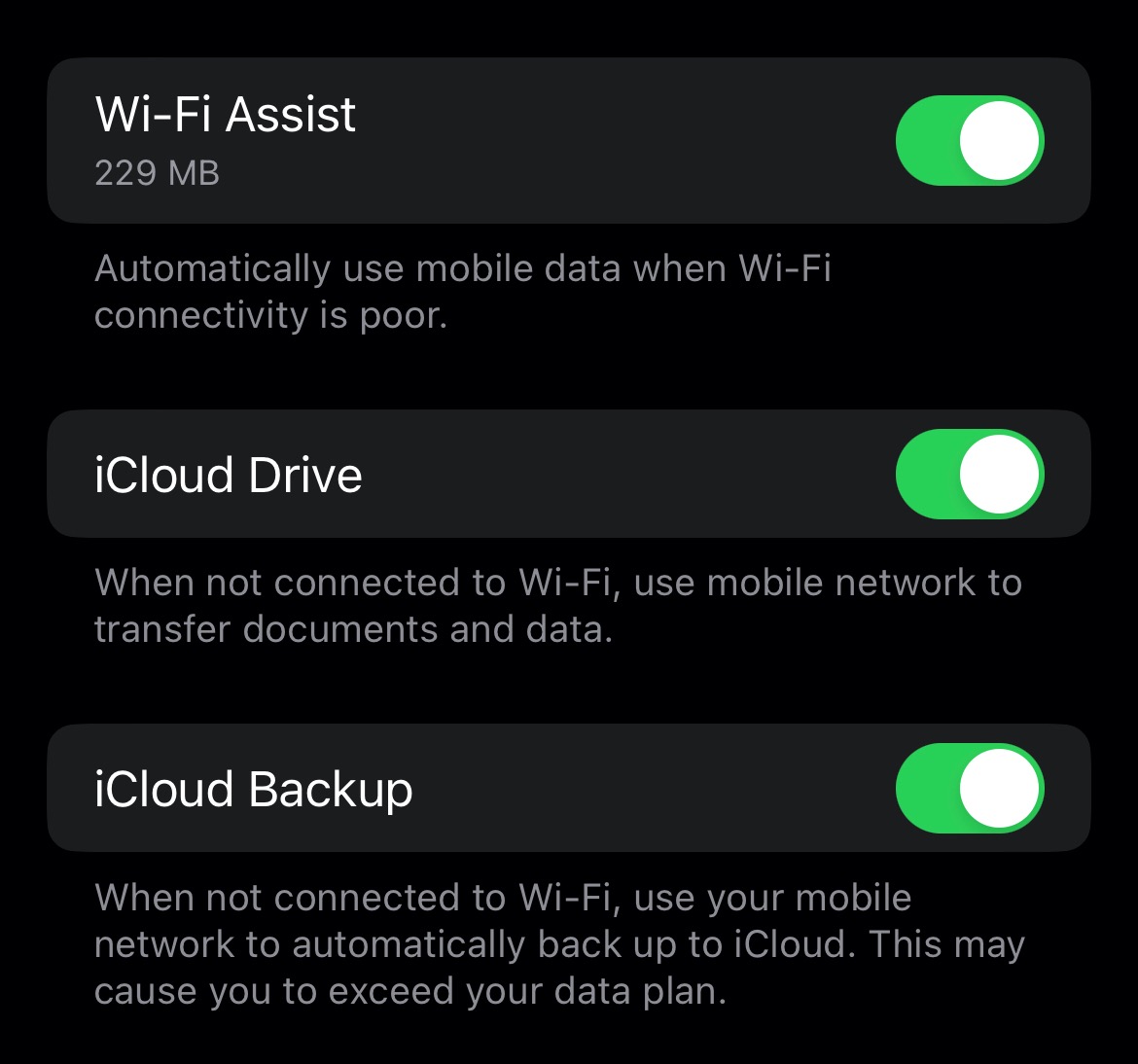
It appeared that my IFTTT applet I use to publish my Instagram photos to Twitter was broken.
I use the Applet, Tweet your Instagrams as native photos on Twitter which takes an instagram posting, posts the image to Twitter. You can share your Instagram postings automatically to Twitter from Instagram, but back in the day this would only post a link. So rather than post each image manually to Twitter I used IFTTT to do this automatically. It had been working fine for years, but recently stopped working. I did get a notification, so I went into IFTTT disconnected and reconnected the applet. I then posted an image to Instagram to check it was working.
Got me thinking I might want to see how IFTTT an worth with Mastodon. Though I do intend to wait and see how Mastodon fares, and if auto-posting is a thing there.
Elon Musk started to impact on the Twitter, so much so that lots of people were talking about moving off the Twitter and onto other similar services, with Mastodon getting much of this traffic. We had some discussions about Mastodon at work. I went out and created an account on mastodon.cloud and then discovered I had already created an account before, well back in August 2018, on mastodon.social. So, I went back and deleted the new account and started to use the original account.
Though I had been on Mastodon since 2018 the recent influx has got me back on the app. Though my stream of stuff seems to be mainly people telling people how to use Mastodon and what and what not to do on the service and how it is different to the bird place (they mean the Twitter).
Reminds me of Twitter in 2009 when there was a similar level of new users starting to use that service. Back in 2008 I wrote this blog post about how I used the Twitter. I basically said Twitter was all about the coffee.
You can say pretty much the same about Mastodon.
However for me Mastodon is all about the coffee.
It’s the coffee you drink with colleagues during a break from work, where you discuss work stuff, but also discuss your commute into work, what you saw on TV last night, what bizarre thing you just saw, the weather.
It’s the coffee you drink whilst browsing the web and when you find an interesting web site and you post the link to your blog, in an e-mail, on your VLE.
It’s the coffee you drink in a coffee shop, where you’re reading the paper, reading a book, chatting.
Mastodon is the coffee you drink in the Library reading a journal, a book, writing stuff.
It’s the coffee you drink with fellow delegates during a break or at lunch at a conference. Where you discuss the keynotes, the presentations, the workshops, where you are going next, your hotel, the food, the coffee, what you do, where you’re going, what gadgets you have in your gadget bag.
Mastodon is about these moments, but without the physical and geographical limitations. Mastodon also allows people from different institutions, different sectors, different organisations, different departments to share these moments. I brings in people from different industries, different countries, different perspectives.
When you decide to follow someone, ask yourself could you drink coffee with this person, would they drink coffee with you?
At the end of the day Mastodon is all about the coffee as Twitter was in the day.
Though it was July 2015 when Apple Pay was introduced in the UK, I have never actually used it until August this year! I bought some parking on my phone and used Apple Pay to pay for it.
It was only today that I actually used Apple Pay at a till! I paid for some shopping using the system at one of those “unexpected item in the bagging area” machine.
I know I should know this, but it was quite a seamless experience. I did have to double tap, which I didn’t think I would need to do.
Well done that now, do I need to do it again? Probably not.
This week I travelled to Dublin for a meeting. The last time I was in Dublin was in 2016 and that was my first trip abroad having changed mobile phone contracts in October 2015. Back then I had no issues with roaming.
I was able to easily join the Three Ireland network, make calls, send texts and use data with no problems or worries.
Though it was July 2015 when Apple Pay was introduced in the UK, I have never actually used it until today!
I bought some parking on my phone and used Apple Pay to pay for it. Seamless process as I didn’t have an account for that particular parking app and hadn’t registered a card with it either. This is how I usually use other parking apps.
Having entered my car registration and duration, I then paid using Apple Pay, which only required a double click on my phone.
It was only a couple of weeks ago I had added a payment card to Apple Wallet, and hadn’t had an opportunity where Apple Pay could be used easily. If I could use contactless, then I would usually use that.
Forget about strategy and culture, what about my breakfast!
“Culture eats strategy for breakfast” is a famous quote from management consultant and writer Peter Drucker.
It can be thought that his view was that strategy was unimportant. To clarify this, what he was saying in this quote is that strategy alone is not enough, a powerful and empowering culture was essential in delivering on a strategy. Without that underpinning strong culture, you will never realise your strategic aspirations. When creating a strategy, you may want to think strategically what else needs to be in place to underpin the process.
Reflecting on this quote though, I did start to think about breakfast, and wondered if I could use breakfast as an analogy for effective strategy implementation. As well as strategic objectives, what else do people need to know in order to deliver those objectives successfully.
I do find talking with people about strategy that they often struggle with implementation, the operationalisation of that strategy and the planning required to deliver the objectives of that strategy.
Across different organisations I have often seen the following process used when it comes to strategic implementation.
Write a strategy.
This is usually done at a senior or board level, usually involving some consultants. The end result is a glossy brochure that talks about a vision, values and a series of objectives.
What happens next depends on your organisation, but I often see the following.
Separate departments, sections or directorates, sometimes even teams will create an operational plan. They then map that plan to the strategic objectives, as that will then “deliver” on the strategic objectives for the organisation.
So, what does this have to do with breakfast Well, imagine that your strategic objective is this:
We are committed to offering all of our customers a world-leading, rigorous, delicious, inclusive breakfast experience embedded in a vibrant welcoming environment.
Well’s that’s an easy enough objective to deliver on, isn’t it?
Well…
Imagine there are various teams across the business who will support the delivery of this objective.
One team creates an operational plan to deliver on eggs for breakfast. They create a plan for cooking eggs different ways to meet customer needs. The plan is detailed and provides the process for cooking eggs different ways, they ways in which they should be presented, the different crockery required and how the eggs should be served to the customer. They use their own proprietary processes and planning tools, which are independent of and do not interact with other planning tools. However their plan implies that only eggs will be eaten for breakfast and no thought is given to the other breakfast components, as they are the responsibility of other teams.
One team creates a plan to deliver the bacon for the breakfast. In order to be efficient and cost-effective (as another strategic objective sets out that the organisation should be cost-effective and efficient), the team decides that they will use the cheapest bacon available, cook it in advance and then add to the breakfast when needed.
The toast team recognise that they need to deliver toast for the breakfast, but they will need time to workshop the kind of toast required, what bread will be needed, the kind of toaster that customers prefer, or whether they cook the toast to order. They anticipate that this planning and preparation will take at least six months and that it will be another six months before they can actually deliver toast to the customer.
One team makes the decision that they will do everything themselves and create their vision of the perfect breakfast, as they don’t trust other teams, or don’t like their work, they plan to procure, prepare and cook everything by themselves.
Another team creates a plan to make mille feuille, or pastry cream slices on puff pastry. They recognise that not everyone wants a sweet pastry for breakfast, but they are very good at making mille feuille. At least one customer said they wanted mille feuille (though they didn’t clarify at the time if that was for afternoon tea or for breakfast).
One team decides that they don’t need a plan and will just get on with making the breakfast. They decide to focus on croissant. Before long they start looking at adding ham and cheese to the croissant. Realising after some failures, that croissant are too challenging to make, they go with making fruit scones instead.
No one is making coffee, as they all assumed that another team was making coffee, that was someone else’s responsibility.
The end result is that the breakfast that the customer receives is not quite what they expected. It is inconsistent, there are aspects missing, and no one appears to be taking responsibility for the end result, and are blaming other parts of the organisation for the failure to deliver.
So did the organisation deliver on offering all of their customers a world-leading, rigorous, delicious, inclusive breakfast experience embedded in a vibrant welcoming environment.
Part of the problem is that there lacks a shared and agreed understanding of what a “world-leading, rigorous, delicious, inclusive breakfast experience” actually is.
For some people a delicious breakfast is the classic full English Breakfast, bacon, eggs, sausages, mushrooms and toast. For others that breakfast needs to include black pudding, beans, hash browns as well as everything else. If you’re vegan though, that breakfast is exclusionary and not what you probably think is a delicious breakfast. If you live in Edinburgh, you might hesitate with a Full English and wonder where the Lorne sausage is.
When it comes to delivering on a strategic objective, it is important that all stakeholders are clear about what the objective means and what success looks like. If your team thinks avocado toast is success and another team is looking at success by delivering a full English breakfast, you are unlikely to deliver on that objective. Defining success and agreeing what that is, is critical to delivering on your vision.
Another issue is that teams are working independently on their plans and then mapping them to the strategy. There are two risks with that, first there could be gaps in the delivery. Secondly teams can create plans for doing stuff they want to do, which may not necessarily deliver on the strategic objective, but as it is in the plan, so it gets done. Teams can also change their plans without reflecting on the implications for the rest of the organisation and that overall breakfast experience.
Of course a single strategic objective is complex enough, adding in more objectives just adds to the complexity.
All teams need to know where the organisation is heading, and how their work (and the work of the individuals in those team) is contributing to the strategic objective. If there is no clarity in vision, no defined values, no sense of direction, then you will not be successful and you are potentially creating and nurturing an inadequate culture.
The key really is that teams need to be clear about what success looks like, their role in delivering that success. They can then plan their work accordingly to deliver on that success.
I joined Three in 2015 and my first trip abroad was in March 2016 to Dublin.
I was able to easily join the Three Ireland network, make calls, send texts and use data with no problems or worries.
Since then I have been aboard to Spain, France, and Bulgaria; each time I was easily able to join a network and roam easily and freely.
I changed my Three contract in June 2021 and didn’t expect any problems roaming going forward.
Arriving in Spain, this week, though my phone would not connect to any network. My son’s phone (also on Three) did connect fine. So I knew it was an issue with either my phone or my contract settings.
Having arrived at the hotel, I joined the wifi. I went onto Three online chat to sort out the roaming, which after two chats, I got sorted. It was a problem with not having international roaming activated, but also have a zero spend limit on the phone. Having sorted those things out I was able to make calls and use the internet in Spain.
There is something about the legacy of the pandemic on the phrase “next slide please” it has almost become a joke during online meetings and presentations. Now as I attend in-person events, people are still making the same joke.
Of course part of the challenge, why this was happening, was the proliferation of online meetings (and events) using Zoom and Teams. Even though it was possible (and some would even say simple) for all the presenters in that meeting to share their slides, often all the slides would be “grouped” together and shared from a single machine. The result was that the person who “shared” the screen would then be the main presenter for all the slides and so any one else presenting would then be “forced” to ask for the “next slide please”.
This was done as it was much easier, especially with multiple presentations, for there to be one presentation. I often saw challenges when different people tried to share their presentations,sometimes it worked, sometimes it didn’t and sometimes it was just a faff!
So what is the solution?
Of course with tools such as Teams you can easily pass control of the presentation to another person. You can take “control”.
With other tools this may not be possible, or you may not want to allow others to control the presentation, hence the next slide palaver that we see at events and in meetings.
One of my solutions is to not actually use slides when presenting.
I can work anywhere, there we go, enough said, let’s move on.
Well, maybe the question, shouldn’t be can you work anywhere, but how can the environment improve and enhance your work.
There is probably a deeper question about the nature of “work” in there, but I’ll leave that for the moment.
The pandemic has completely changed the concept of the workplace and patterns of working. There has been a lot of press and political rhetoric about people returning to work, though what they mean is much more about returning to the offices where people can work.
Dame Carolyn said the UK’s offices were “vital drivers” of the economy, supporting thousands of local firms, from dry cleaners to sandwich bars. “The costs of office closure are becoming clearer by the day. Some of our busiest city centres resemble ghost towns, missing the usual bustle of passing trade.
This tweet echoed my thoughts on that article.
What would you rather have? A better work/life balance or the knowledge you’re keeping Pret open? Unbelievable.
The issue is that the genie is out of the bottle now, both staff and businesses are seeing the potential benefits (and the pitfalls) of working from home. This shift in working patterns will not go away, despite the feeling that the pandemic is “over”. This doesn’t mean that we’re all working from home permanently as we were under lockdown, but it does mean that we’re very likely not to go back to the way things were.
When I visited London in July 2021 and it felt deserted, almost apocalyptic. There was no one around as I went into our London office on that Monday in July. Coffee places were closed and the trains were deserted.
On more recent visits, London does feel quiet on a Monday and a Friday, though pre-pandemic, Fridays were often quieter anyhow. During the middle of the week, London feels very busy and crowded. There are queues for sandwiches and coffee. Having said that, looking into the office windows by our office and on the way into London, we can see many empty desks and meeting rooms.
However what does this all mean for the nature of work. I am reminded that work is something we do, not somewhere we go.
I remember a Twitter discussion, where someone was asking why anyone would work from the office one day and then work from home another. Their thinking was that the nature of their work was similar day to day, so why would you keep changing your location for working? I think this is a fair point, and for some roles where the day to day routine is repetitive then working in the same location can make sense.
For many people, including myself, what we do changes over the day, during the week and over time. Sometimes my work is about reading and making notes, add in there writing. Other times I am facilitating workshops, attending meetings, running meetings, having conversations, and so on. Throw in their online versions of these as well to complicate the mix.
My working pattern vary week to week, so each week I could be doing something different, and sometimes in different parts of the UK.
The pandemic certainly has changed my working patterns and I have a lot more online meetings (and events) in my diary than I did pre-pandemic.
I do like to consider I can work anywhere. I don’t mind if I am at home, in our different offices, at Caffe Nero drinking coffee, on the train, even sitting outside in the sun!
Having said that, the environment in which I work can impact on my productivity and what I do or produce.
I don’t really find having an online meeting sitting at a desk in the office, effective. I much prefer to do those calls in a meeting room where I can shut the door and control the external noise (also means I don’t necessarily need to wear a headset either).
If I have a lot of online meetings, than most times I will work from home, no one to interrupt me, and coffee easily on hand. Of course this changes during the school holidays, when I will more likely commute into the office to avoid disturbing the rest of the household.
When it comes to (online) presentations, a lot depends on where I am. In one of our offices, you can’t turn off the air-conditioning in the meeting rooms and it can be quite noisy, so in those circumstances, I will probably present from home (luckily for me I have decent broadband now). In one of our other offices I can turn off the air-conditioning in the meeting rooms, so have used them for delivering online presentations.
When I need focus, I am much more flexible, I am quite happy to sit at a desk (home or office), though I will sometimes prefer an external location, a place where I can drink coffee.
For mundane administration or processing of e-mail,location becomes even less important. This is the kind of thing I can do on the train, drinking coffee, or waiting for a meeting to start.
If I have a day of online calls and meetings, then I really don’t see the point of commuting to the office and sitting at a desk with a headset, or hiding away in a meeting room.
Though I have participated in many online workshops with tools such as a Miro board, I have to say I am not really a fan. If, given the choice, I would much prefer to meet in-person and run that kind of workshop.
Of course one aspect of “going into the office” which can be difficult to recreate online, is that ad hoc meeting or conversation, the happenstance of someone you need being in the office on the same day you are, chatting with other people, as you make coffee, and so on. I do use tools such as Twitter, Yammer and even Teams for this kind of thing, but it is not the same. For somethings the online is better (think about sharing news and links), for others in-person is better for me.
Reflecting on the changing nature of work does mean that desks, offices and rooms which were ideal for the way we worked in 2019, are now not fit for purpose.
We might want to consider how and where people are working and then reflect on creating effective environments that enhance and enable productive working environments.
This might mean, more social spaces to encourage in-person interaction. Organisations which have a high level of online calls and meetings, might want to consider creating more acoustic spaces for people to do this. Where people do a lot of presentations, a TV studio type space might be the answer.
Of course the patterns of working with people potentially coming into the office for a day a week or a few days in the week, does mean that offices can be quite busy in the middle of the week and much quieter on Mondays and Fridays.
Organisations may want to start thinking about how they will encourage people to come into the offices on those quiet days, what incentives could be in place, so that when people plan their weeks, occupancy of the office can be spread more evenly over the week. This could be travel passes (alas taxable), doughnuts, financial incentives. Or go the other way and use disincentives.
Within my own organisation, decisions are still being made about the future of the offices we have. However it is clear that we won’t be going back to what we had before. Even being a pretty much blended workplace anyhow, the covid-19 pandemic forced a non-office culture on everyone. Of course everyone won’t be able to work from home, and not everyone will want to work from home. Giving people a choice is important.
What I am hoping to see in the future is that office space encourages and enables different ways of working and that rows of desk working staff is not the norm for the future.
Microsoft has retired its web browser Internet Explorer after 27 years
Internet Explorer’s popularity was dented by the launch of faster browsers such as Chrome and Firefox, as users seized on new applications to navigate platforms including Google Search, Facebook and YouTube. The rise of smartphones then arguably delivered the fatal blow, with Apple’s pre-installed Safari browser and Google Chrome on Android phones helping to shift internet access and usage into the mobile realm.
As a Mac user I remember the frustration of web sites being Internet Explorer only, which was compounded when I started using mobile devices.
I do like this animation of web browser usage over the years (you certainly see at one point the dominance of Internet Explorer).