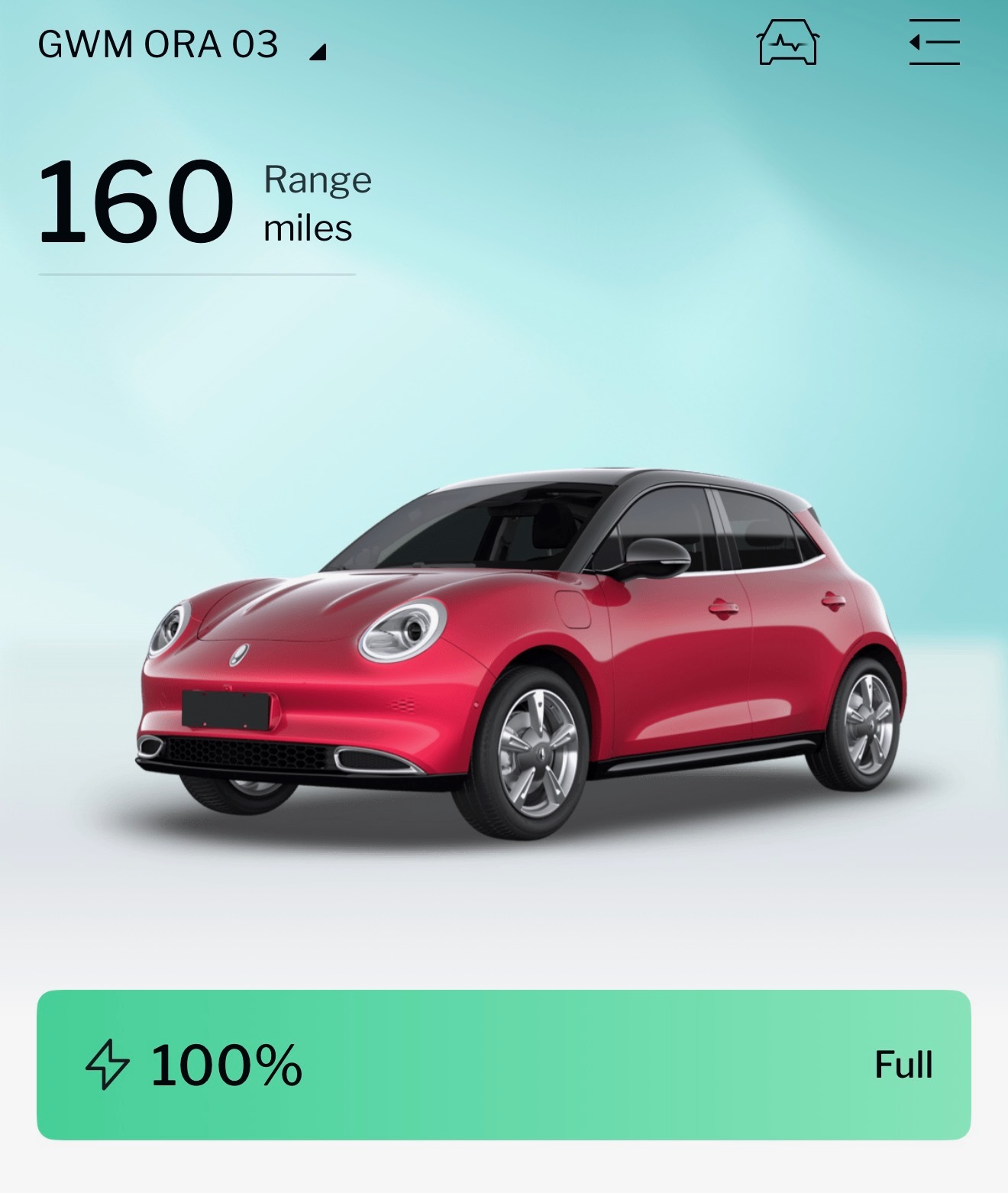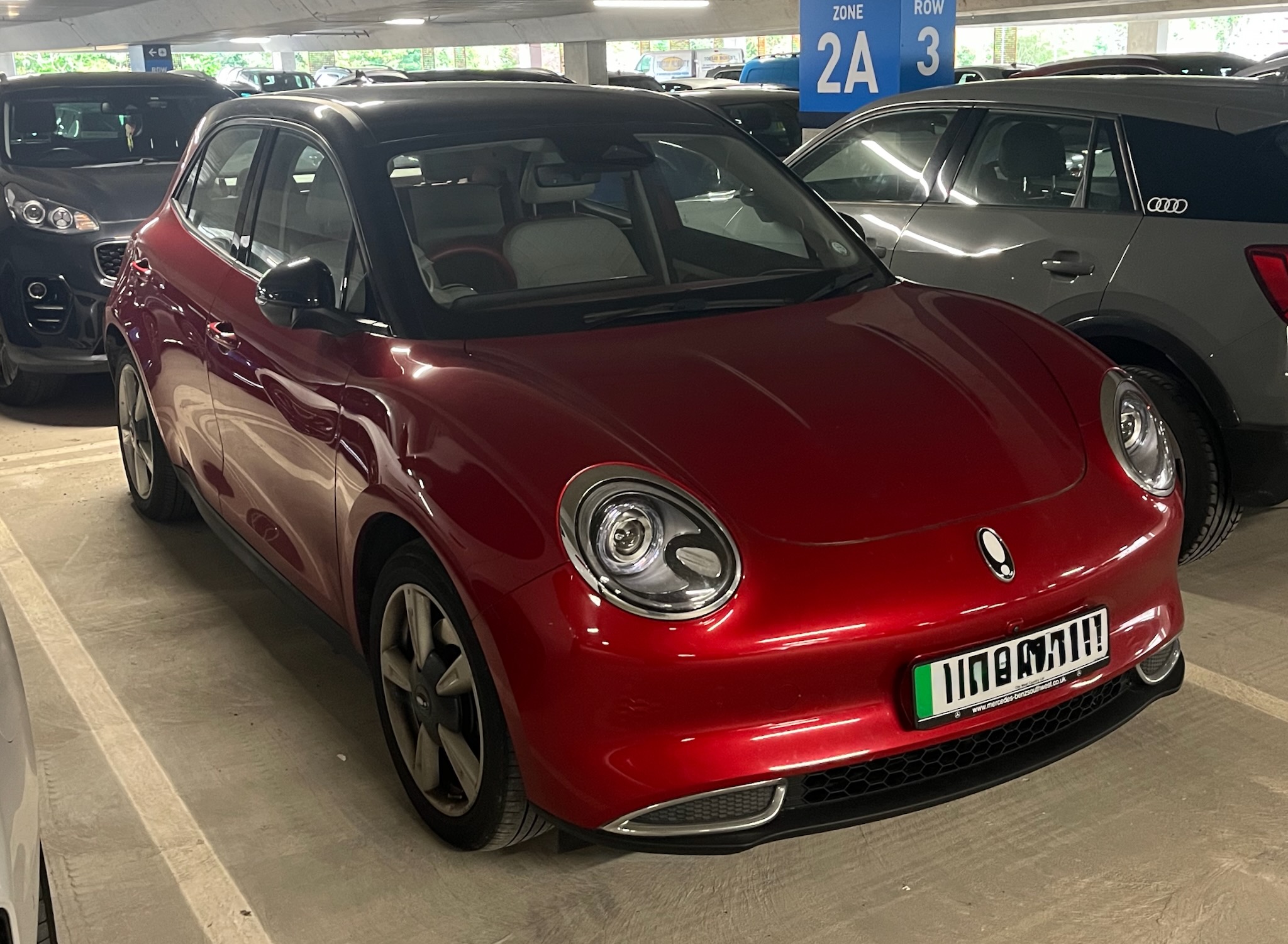
Today I said goodbye to the Funky Cat. It was a salary sacrifice lease deal through work, and I have been driving the Cat for three years.
The Funky Cat was my first experience of owning and driving an EV and I will say it has been a positive experience. Though there have been some issues on that journey one the last three years. I wrote 127 posts about the Funky Cat.
The main positives have been as follows.
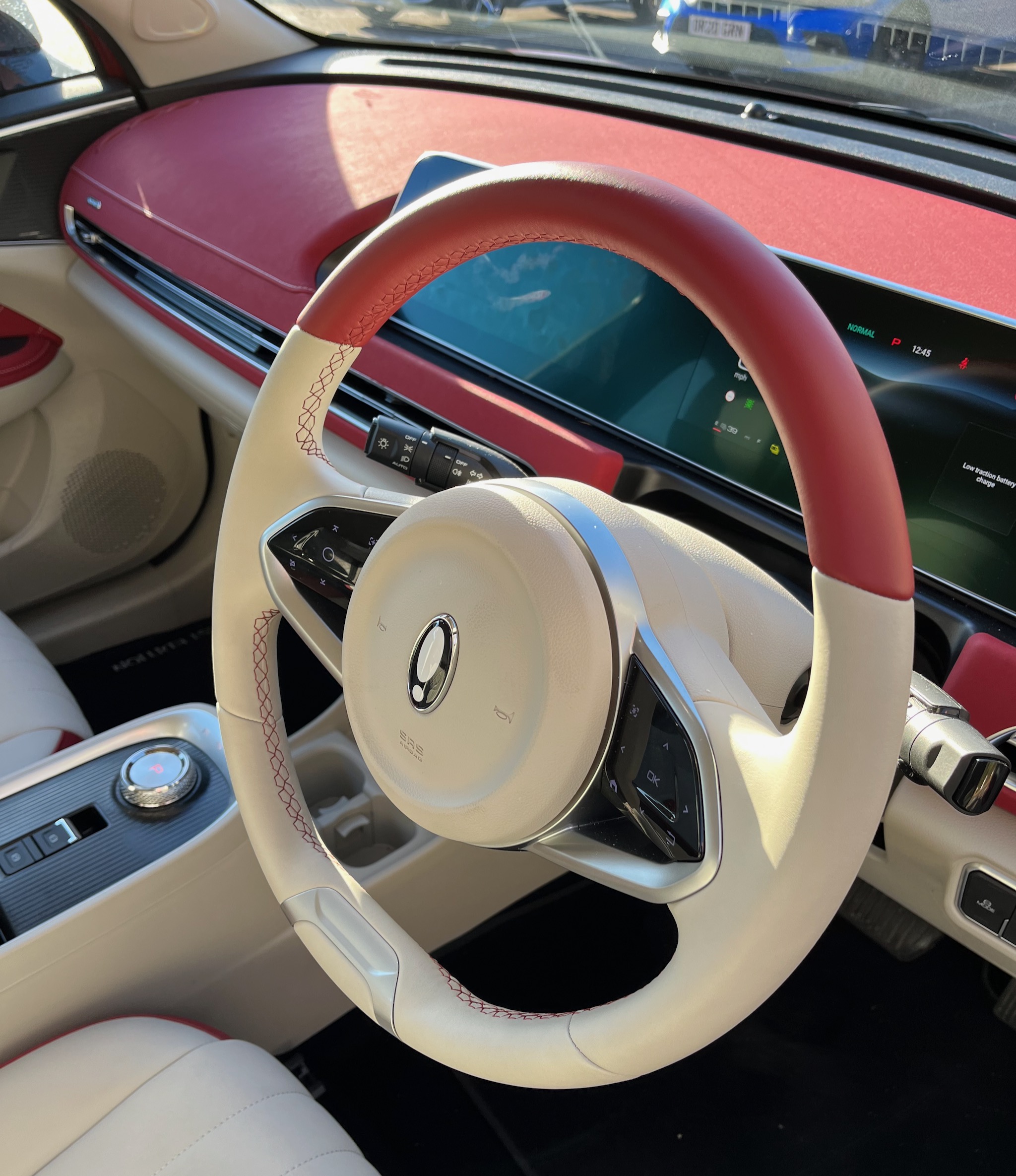
The ease of driving what is essentially an automatic car. My only previous experience with an automatic was back in March 2006 when I rented a Volkswagen Passat up in Scotland. That was an awful experience. I struggled with the accelerator and the brake. Of course the main reason was that I would normally drive a manual car, so was use to using both feet. Driving the Funky Cat I had to train myself to not use the left leg. It really didn’t take that long to get the hang of it, if anything my awful experience up in Scotland with the Volkswagen helped me in understanding the dynamics of driving an automatic. However over the three years of driving the Funky Cat, my left arm would often drop down to change gear, with the non-existent gear stick.
Probably the one safety feature which I now appreciate, that for many months I did turn off, was emergency lane keeping. Though I then started to think, is if it is doing it as much as it is (which was annoying) maybe there is an issue with my driving. So, I now leave it on and try to ensure my driving is in lane. On some country roads with poor markings, I do turn it off, but for main road driving I keep it on.
Initially I didn’t realise that there was a Smart Cruise Control functionality with the Funky Cat. It was only after reading a post on the Facebook that I realised that I could use this option. Under Smart Cruise Control the Funky will maintain the car in the centre of the lane it is in, as well as maintaining a consistent speed and a safe distance. I was impressed with the Smart Cruise Control, however it did appear to kill the battery and reduce the range (I think part of the reason was that it turned off regenerative braking). More long distance motorway driving, the technology was impressive in keeping the Funky Cat in lane and not too close to the cars in front. However, with motorway driving, you also want to have the range, so now use it rarely.
I did use the Adaptive Cruise Control (ACC) on the Funky Cat quite a bit. Unlike traditional cruise control, as well as maintaining a constant speed without using the accelerator, it will also change the speed to ensure that the Funky Cat maintains a safe distance to the car in front. I did miss the speed limiter which I had on previous cars.
I liked how it could carry five adults in comfort. The back seats had plenty of leg room, even with the driver’s seat set quite far back. That was one of my initial use cases in choosing a car, could it seat five adults.
The main challenges were (and in no particular order).
Firstly, was turtle mode. I was going for a short drive when the reduced power warning light came on, this is a yellow tortoise, not a turtle. Lost all power to the drive train. Pressing the accelerator didn’t work. I crawled to a halt, but managed to stop safely on the side of the road. Turned the power off waited a few minutes and set off again. As soon as I slowed down for a junction it came on again and I lost power. This was down to a coolant issue with the motor overheating. The electric motor got too hot, but the coolant system didn’t kick in. It had to go to the dealer for a software update.
Secondly the charging infrastructure, when I got the car down in Weston-super-Mare. I didn’t have a home charger and in Weston there were only two rapid chargers (150kWh). My experience with other fast (ie slower) chargers were that either they didn’t work, or were been taken out of commission. On a long journey to York in September 2023 it was challenging to find a vacant charger at the motorway services I visited.
However, over the three years I have seen massive improvement in the charging infrastructure, both locally and as I have travelled. Weston now has over twenty rapid chargers. I have used the fast chargers at the railway station on a regular basis once they were installed six months after I got the Funky Cat. I have also appreciated the installation of chargers at the National Trust properties I have been visiting. This makes it much simpler to plan journey and when to charge. The Tesla supercharger network also started rolling out availability of their chargers to non-Tesla cars and as they are significantly cheaper than chargers such as InstaVolt and Gridserve, they have been my go to chargers when travelling. When I got the Funky Cat there were none close to me, over the last three years they have opened up the chargers at Cribbs Causeway and Eastville. Though the enforcement of the 80% congestion charge has been frustrating with the short range of the Funky Cat.
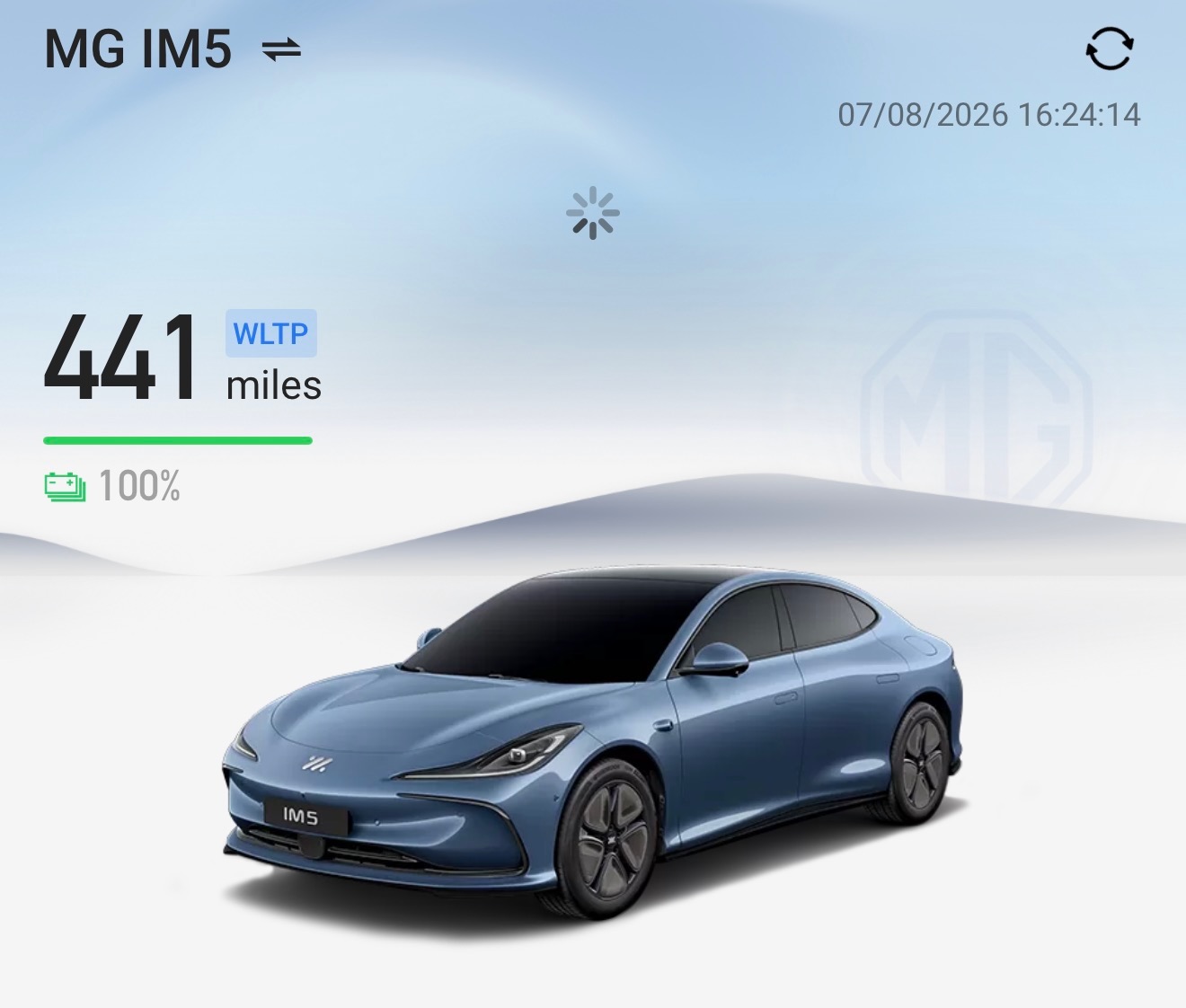
Talking of range, the Funky Cat had a WLTP range of 193 miles. I never achieved that figure, the highest predicted range I ever got was 185 miles, however that was when the Funky Cat was “new”, now three years later I am getting a top range of 170 miles.
When I first got the Funky Cat, most of my driving was lots of local drives and carrying four to five people. The Funky Cat was ideal for that. However after driving the Funky Cat for three years, I am doing a lot less local driving, and more long distance driving. For local driving the range of the car is almost immaterial, however for anything over 75 miles, I then need to think about and plan on where I am going to charge. Sometimes it’s easy, as with many National Trust properties which have chargers, I arrive, plug in, enjoy my day and return to a charged car. Otherwise I plan stops where there are the cheaper Tesla chargers, sometimes these are in the middle of nowhere (it appears), other times they are based in shopping services, motorway services, or a farm shop.
Though the Funky Cat could carry five adults in comfort, the sacrifice was the boot size, just 228 litres. Though it was also an awkward shape as well. When the rear seats are folded down, the boot space expands to 858 litres. Even when it was just me travelling, I could fill the boot quite easily with a suitcase, my laptop bag, and the coffee machine! Once heading to the airport with four of us and just two suitcases, we needed to put one of the suitcases on the front seat, as we couldn’t make two of them fit in the boot.
One real challenge was four of us headed to France, then we needed to be a lot more imaginative when it came to luggage, reducing the amount of what we took, but also avoiding suitcases. We did it though.
The Funky Cat did not have a rear window wiper, it also had a very small rear window. This meant driving the funky Cat was like driving a van, a lot of reliance on using the wing mirrors. Parking was less of a problem, as it did have a 360 degree camera system.
When I got the Funky Cat, it did not support Apple CarPlay, as a result I would have to perch my phone on the dashboard when I was using Waze. Eventually there was an update that would enable CarPlay, so I booked it in with the dealer.
The dealer had the car for the whole day, but didn’t start the update until close to the end of the day. The update failed, so they needed to keep the Funky Cat to try again.
In the end they had for three months. They killed the head unit so it needed to be replaced. When I eventually got my car back it was then updated.
CarPlay was good, but I did have issues, the main one was that there was an issue where the location of the car was reported to be over a hundred miles to the east. Too often, I would be trying to find how to get somewhere and CarPlay would have me in a completely different location or even in the sea. Never really got to the bottom of the issue, but I think it was a phone issue and incompatibility with the car GPS system.
Another ongoing issue was CarPlay crashing, which meant the screen froze. The only solution was to disconnect the phone from the car and reconnect. Of course it usually did this at the worse possible times, usually as I was about to arrive somewhere and directions from Waze was critical.
I occasionally had range anxiety with the Funky Cat, coming back from Dover once with closures of the M25 and the M4 I was down at one point to 1% charge as I approached Membury services in the middle of the night. Most of the time, well virtually all the time, I did plan journeys so I was never going to go below 20% if I could help it. With the short range of the Funky Cat though, this often meant charging a number of times when making a journey. I did have one issue with this, in my early travels with the Funky Cat, I was coming back from York and had planned to stop at Tamworth Services, but the charger was in use, the chargers at Hopwood were also in use. In the end I went to a BP Pulse charger at a pub in Alvechurch.
One feature of my old Peugeot 208 I liked was the speed limiter, which stopped the car exceeding a set limit, ideal for Bristol with the 20mph zones across the city. The Funky Cat never had that feature, so was quite easy to exceed the speed limit if you weren’t careful.
Initially I was annoyed by all the safety features of the Funky Cat, especially some of the verbal warnings. In the end rather than keep turning them off, they reset after every trip. I decided I would try and drive without setting them off. Managed to do that quite well. Some were annoying though, when the sun was shining through the front windscreen the car would often tell me to concentrate on driving.
One verbal alert though did surprise me.
Please smoke in moderation and drive carefully.
One, I don’t smoke.
Two, I don’t intend to start smoking.
I did however turn off the lane keeping system when travelling on country roads, as they system couldn’t cope. Ideal for the motorway and A roads, however driving through roads in Dorset and Devon, it would continually beep and tug at the steering wheel.
Things I thought might be an issue, as I mentioned, I did take the Funky Cat to France twice, once for a day trip to Dunkerque and once on a holiday to France and Belgium.
Both times I had no issues with travelling in France. I didn’t charge on my day trip, however on the holiday I did charge in both France and Belgium without any issues.
So, good bye Ora it has been fun.
The Funky Cat has left the building!